March 2025
Hydrangeas. The good, the better and the beautiful!
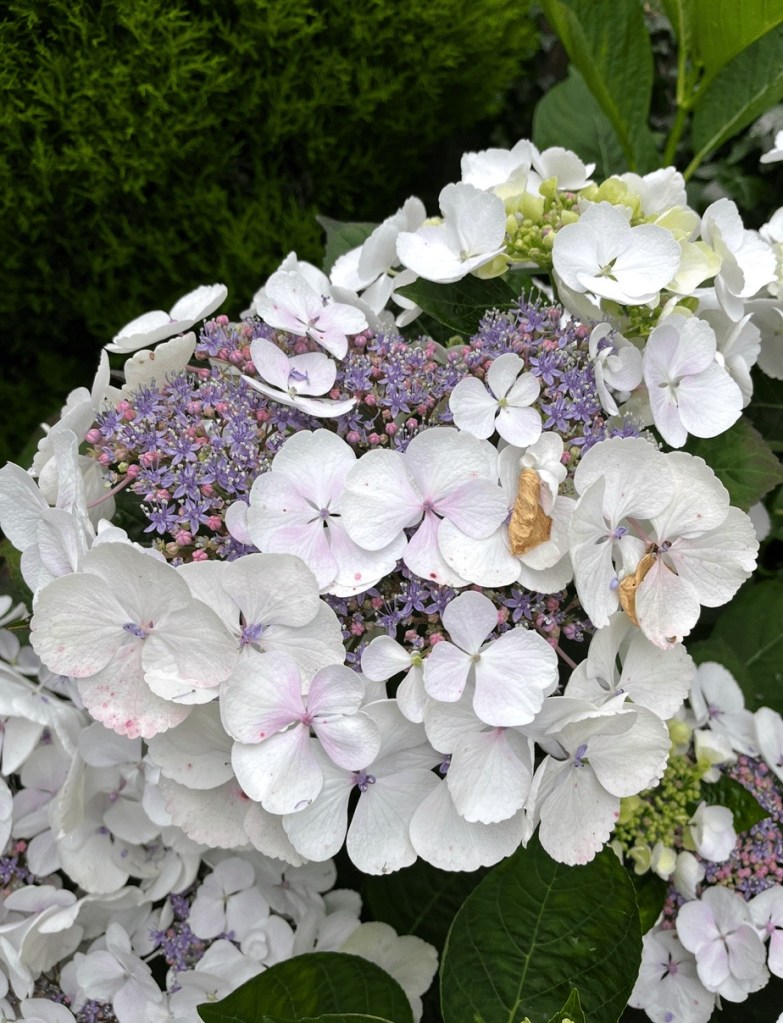
With the spring equinox on Thursday gone, we can now truly say that spring has sprung. And so it is… one of my favourite seasonal garden rituals can begin – pruning hydrangeas! For me it’s like a symbolic transition, marking the end of what has seemingly been a long, hard winter, and moving in to a rejuvenation period of growth and abundance.
Having managed to resist the temptation to prune since autumn and for good reason, this is the task I’m now itching to tackle. The dried flower heads serve several purposes throughout winter which is why it’s a waiting game. They create a microclimate around the shrub’s emerging buds to ensure they are well protected from frost; they provide valuable shelter for insects and small wildlife; they add visual interest to the garden over winter and my favourite reason; birds use the dried petals for nesting material in early spring – a discovery I made when I once came across an old nest adorned with soft skeletonized hydrangea sepals, like silk woven into a tiny, delicate masterpiece, now abandoned—its purpose complete, a quiet echo of the circle of life itself…
But perhaps I digress…
So with spring now here, garden centres are filling up with a proud nation of gardeners leisurely stocking up on seasonal plants and tempting offers…. And with Mothering Sunday next weekend, they’ve got that covered. If not a rose, then surely, almost certainly – a hydrangea?
But wait! In the world of hydrangeas, some are more equal than others (if I may). Allow me to lay their cards on the table. Many of the most popular varieties – notably the mophead hydrangeas (Hydrangea macrophylla var. hortensia) – are sterile cultivars, meaning they produce little to no fertile flowers. So, while they may dazzle with their big, blousy blooms, they offer very little in the way of sustenance – no nectar, no pollen – for bees and butterflies. And with biodiversity in crisis, perhaps it’s time to rethink our choices. After all, there are so many beautiful lacecap hydrangeas and other species with fertile, nectar-rich flowers. Surely there’s a better – if not an equally stunning – option? (If you are a bee you’d think so.) Let’s take a look at just a few of the many species worth considering.
Hydrangea macrophylla var. normalis (Lacecap Hydrangea) – Native to the coastal and mountainous areas of Japan, this has a mix of sterile outer flowers and fertile inner flowers.
Hydrangea paniculata (Panicle Hydrangea) – Native to China, Japan, and Russia, this species thrives in forest edges and mountains. Its cone-shaped flower clusters are rich in nectar, attracting bees from summer to autumn. Varieties like ‘Kyushu’ and ‘Tardiva’ are especially pollinator-friendly. The soft, fuzzy, delicate pollen is so hard to resist.
Hydrangea quercifolia (Oakleaf Hydrangea) – A native of the southeastern U.S., this woodland shrub provides nectar in mid-summer and has stunning autumn foliage. Another true favourite of mine as it’s also a bit unusual in gardens here.
Hydrangea arborescens (Smooth Hydrangea) – Found in North American forests, varieties like ‘Haas’ Halo’ feature lacecap blooms that are highly attractive to pollinators. Sadly though the popular variety ‘Annabelle’ (with large white heads) is a sterile cultivar.
Hydrangea serrata (Mountain Hydrangea) – Native to Japan and Korea, this compact shrub thrives in mountain forests and produces fertile lacecap blooms. ‘Bluebird’ is a great choice.
Hydrangea aspera (Rough-Leaf Hydrangea) – Found in the Himalayan foothills and parts of China, this hydrangea has velvety leaves and large lacecap flowers that draw in pollinators. The ‘Villosa group’ (another of my top picks) I first saw growing at the Oxford Botanical Garden.
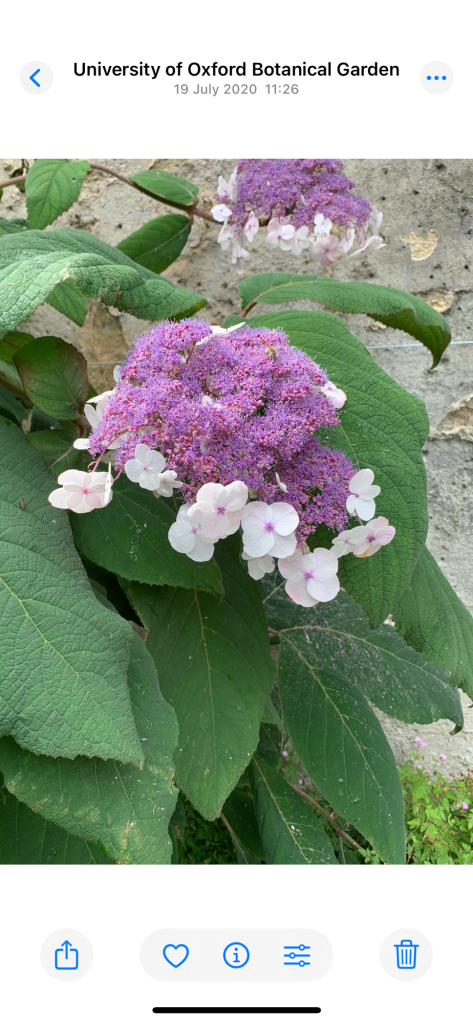
Hydrangea anomala subsp. petiolaris, a shade-loving climber native to China, Japan, and the Himalayas, is ideal for fences, trellises, and shaded walls, offering nectar for bees throughout summer.
Hydrangea involucrata (Japanese / Rosebud Hydrangea) – Native to Japan and Taiwan, more unusual here, it blooms later in summer, offering an essential nectar source when others fade.
Whether lacecap, mophead, species or cultivar, all hydrangeas love moisture-retentive soil and do best in dappled or part shade. I think they always look their happiest as part of a woodland garden amongst other trees and shrubs.
Looking beyond their garden value, hydrangeas have also played significant roles in traditional medicine, rituals, and folk practices for centuries and this cultural fascination is worthy of appreciation too.
In Native American medicine, the Cherokee used Hydrangea arborescens root as a diuretic and kidney tonic, earning it the nickname Seven Barks due to its layered root structure.
In rituals and symbolism, hydrangeas in Japan symbolise apology, humility, gratitude and the fleeting nature of life. Hydrangea serrata leaves contain phyllodulcin, a natural sweetener and in China and Japan, the dried leaves are used to make Amacha, a tea that is central to Buddhist rituals celebrating Buddha’s birth.
In Korea, hydrangeas represent understanding and enlightenment. In Victorian England, hydrangeas were considered a symbol of vanity and boastfulness, alluding no doubt to the large and showy blooms! These days they are more symbolic of emotions such as gratitude, appreciation and understanding. So here’s to Mother’s Day!
So whether chosen for their vibrant displays, wildlife benefits, or cultural significance and symbolic meaning, hydrangeas have more to offer than meets the eye. As a new season begins, selecting the right hydrangea can bring both beauty, biodiversity and an exquisite touch of serenity and calm to your garden. Choose wisely my friend!
 Garden Regeneration
You must be logged in to post a comment.