Now is the time to sow native wildflowers in your garden, creating a vibrant, natural space that supports local wildlife and gives you a certain kudos at the same time.
By choosing the right native mix suited to your soil type, you can help foster biodiversity, provide nectar for pollinators, and enjoy the charm of wild blooms for years to come.
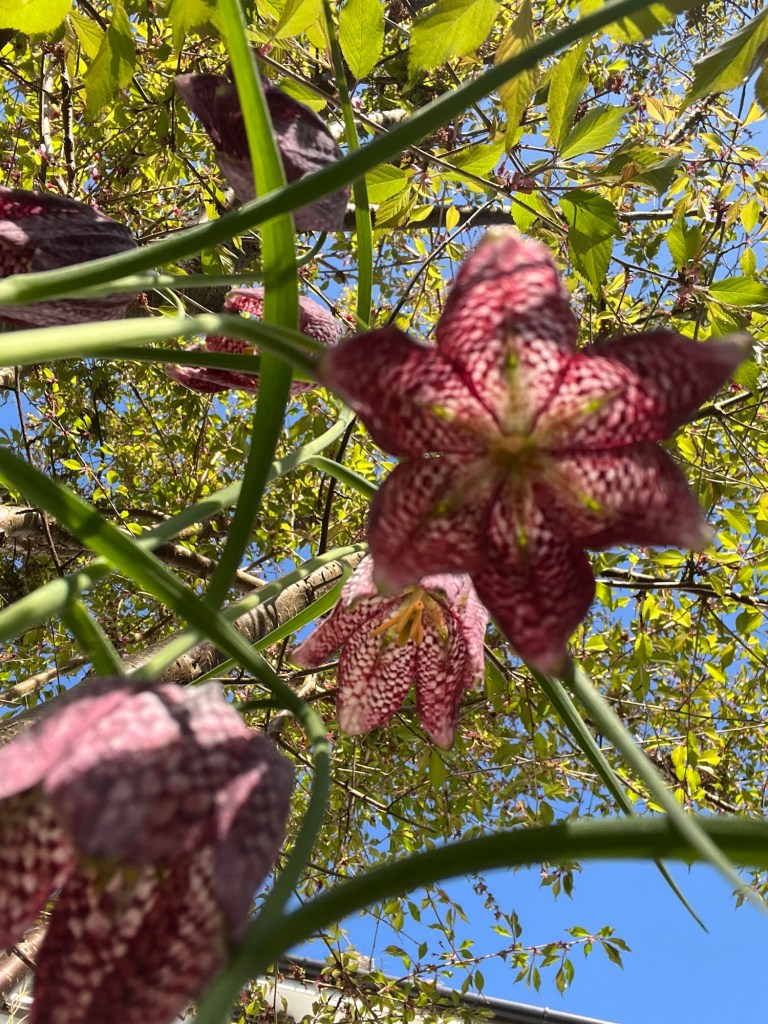
A patch in your lawn, left to flourish with flowers like Primroses, Fritillaries, and Ox-eye Daisies, brings a sense of natural elegance to your garden. Primroses bloom in delicate pastel hues, while Ox-eye Daisies later in the summer with their white petals and yellow eyes evoke memories of countryside meadows. But the true showstopper in a wildflower mix in my opinion is the Snake’s-head Fritillary, in flower right now and a perfect reminder of why we should all be sowing native species.
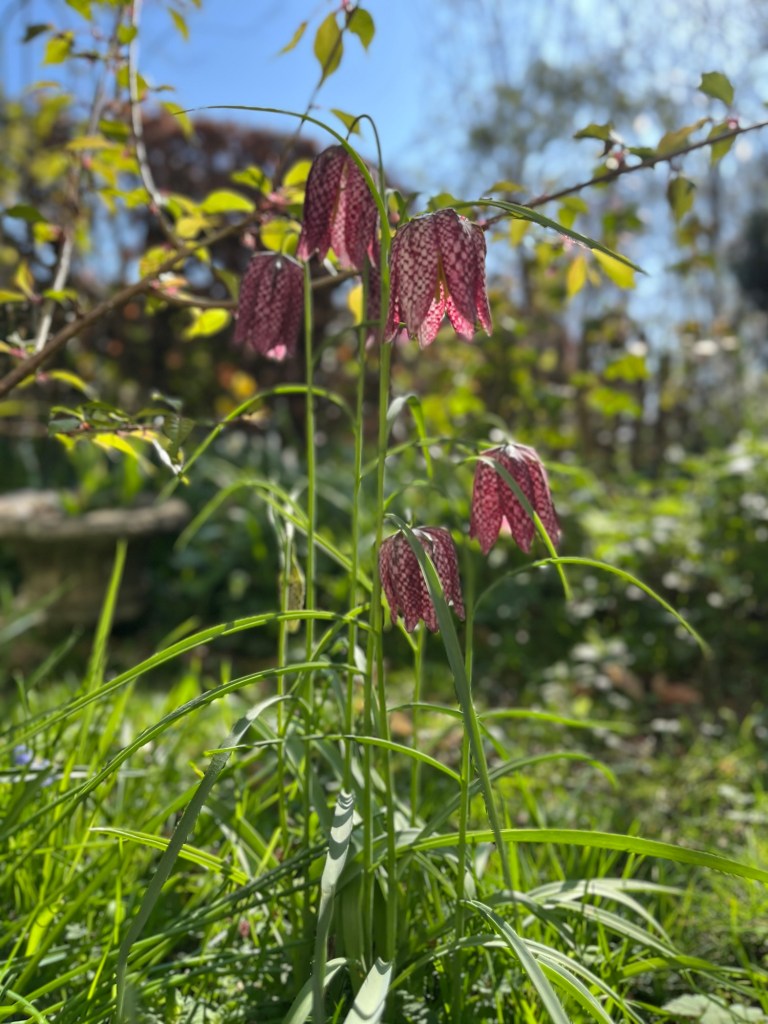
The Snake’s Head Fritillary (Fritillaria meleagris), are wildflowers known for their checkered, bell-shaped blooms. These flowers, which appear in early to mid-spring, have an elegant, sophisticated, delicate charm. Their burgundy purple or white checkered petals are a striking feature, and there is something rather special or magical about them as if a true flower power of the fairies, pixies and elves.
Fritillaries grow to around 30-40 cm tall and prefer moist, well-drained soil, making them ideal for meadow-like areas or damp spots in your garden. They thrive in full sun to partial shade and can tolerate a range of soil types, although they flourish in neutral to slightly alkaline conditions.
In folklore, snake’s head fritillaries were seen as spiritual protectors. Their rarity and delicate appearance added to their mystique, reinforcing their association with good fortune. The distinctive checkerboard-patterned flowers were believed to guard against evil spirits, with planting them near the home thought to bring luck. As they bloom early in spring, fritillaries symbolised renewal, hope, and the end of winter’s hardships, marking a fresh start. This connection made them symbols of prosperity, good fortune and new beginnings.
In folk medicine, some species of fritillaries were traditionally used to treat respiratory issues, though their toxic properties made them less common in widespread use. As a disclaimer let me just say let’s leave these stunners to be enjoyed by the pollinators and other visitors to your garden – including yourself – and let the Covid-19 scientists continue to work on that one. But who knows, perhaps just the act of planting them (along with a little bit of fairy dust) will help shield you from the next outbreak. There’s certainly no harm in trying!
 Garden Regeneration
You must be logged in to post a comment.