Using seasonal produce from our very own back gardens of West Sussex…
October: Quince paste or Spanish ‘membrillo’
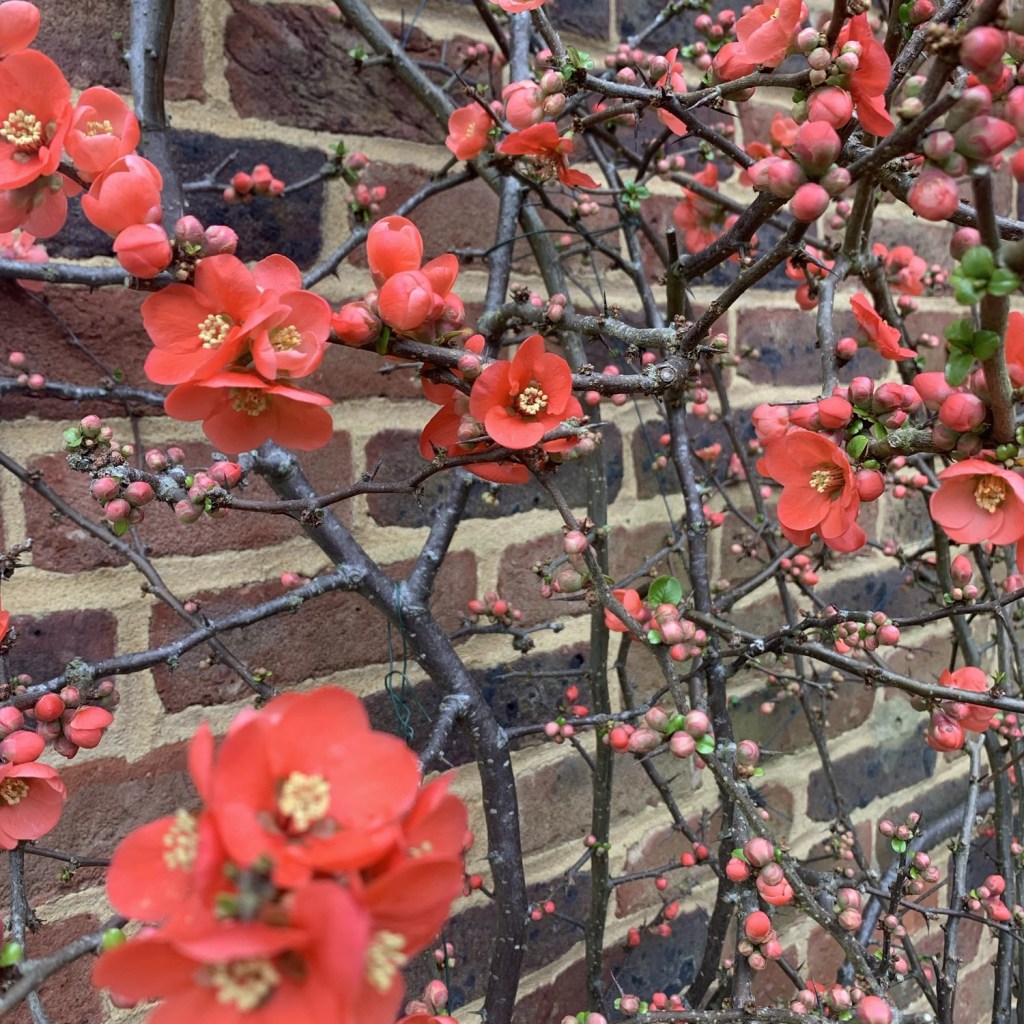
Quince paste (membrillo) works beautifully using Chaenomeles (Japanese quince), as they’re very aromatic and high in pectin. Many people don’t realise that the slightly unusual fruit, which appears in late summer on the thorny shrub with the highly ornamental flowers in spring, is edible. Membrillo is eaten in Spain with Manchego cheese (a hard sheep’s cheese) but works just as well with other hard cheeses.

Ingredients
- 1 kg Chaenomeles /quince fruit (washed – no need to peel)
- 750 g granulated sugar
- Juice of 1 lemon (optional)
Method
1. Prepare the fruit
Select the best of your quinces and roast them at 190°C for 15–30 minutes, until the skins begin to peel away and the flesh is soft and fragrant. Roasting helps deepen and caramelise the flavour, while keeping water-soluble compounds like amygdalin from leaching into the flesh. It also softens the fruit to make skin and seeds easy to separate.
2. Remove skins and seeds
Allow the fruit to cool slightly. Then cut away the skins (discard) and scoop up the soft pulp and add to a pan. You should hopefully be able to scoop out the seed capsules whole. Discard these too. If the skins have broken down too much, you can press the mixture through a colander to separate the skin from the smoother pulp.
3. Weigh and sweeten
Weigh your prepared pulp — this is your base weight for the recipe. Add sugar equal to three-quarters of the pulp weight (for example, 700 g pulp = about 525 g sugar).
4. Cook the paste
Place the pulp in a pan and add just enough water to cover it — plus a little extra (it needn’t be exact). Add the sugar and lemon juice (if using). Bring to a boil and simmer, stirring regularly, until the paste thickens and turns a deep amber colour. It’s ready when a small spoonful sets like jelly on a cold plate.
5. Set and store
Pour into a parchment-lined dish or tin and leave to cool and set. Once firm, slice into blocks and store in the fridge wrapped in parchment paper. It pairs perfectly with hard cheese or cold meats.

Tweaks: I added a couple of tablespoons of dried elderberries to the cooking but, school girl error, this added extra work in the separation stage of seeds and skin, as you’ll also want to remove these through a colander. Next time I will boil the water and berries first before straining to make a tea before adding to the fruit! I might also blend the skin and pulp. You could also try spice like star anise or rose water.
 Garden Regeneration
You must be logged in to post a comment.