January 2025
The Robin Red Breast
Erithacus rubecula
Would it be the robin or the blackbird for this post? Both birds being iconic resident UK birds during the winter months and worthy garden birds to write about now. Whilst my gut leaned toward the robin, it also felt like the clichéd choice for winter. After all, the robin is the quintessential symbol of Christmas, gracing countless festive cards and double-page spreads of local magazines at this time of year and I’d rather be a little bit different.
Having said that, with heart-felt connections made with several robins across gardens in recent weeks, and when no other birds were in sight (admittedly my stash of mealworms aiding our camaraderie), I knew there was a message there. And so it is that the robin proudly features here and I am honoured to write about such a feisty, ‘common’, garden bird.
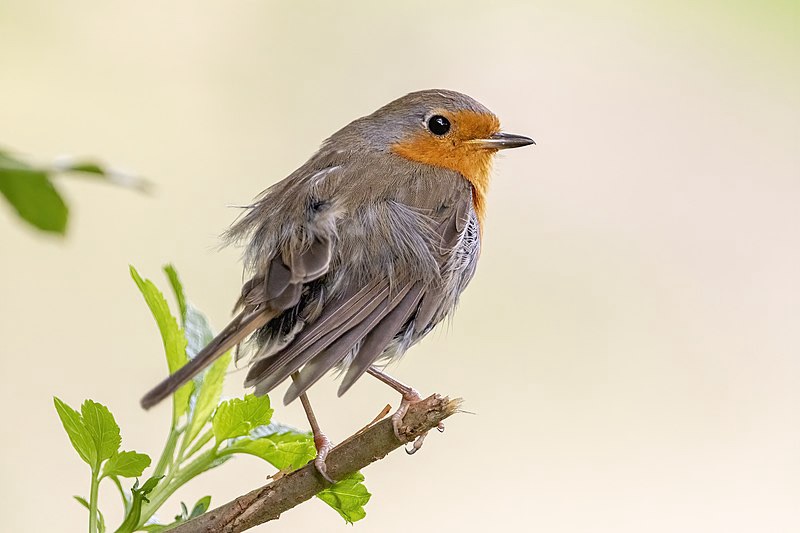
We all know the robin for its ‘red breast’, despite it more accurately being a vibrant hue somewhere between red and orange. This misnomer dates back to a time when the English language used “red” to describe such hues, long before the word “orange” was adopted in the 16th century, following the introduction of the fruit to Europe from Asia. Having established the origin of its name, the robin is much more than a flutter of excitement on a dreary winter’s day. It holds cultural and spiritual significance and plays an essential ecological role, serving as a vital ally in fostering a healthy, balanced garden.
Robins have a keen eye for movement and as you titillate the ground as you work, you might notice a robin in the flanks, eagerly watching your every move, judging just the right moment to flit down and scoop the catch. Their diet includes aphids, beetles, worms and caterpillars and it will only be a minute or two before the robin is following in your wake. I have wondered whether it has perfected the optimum time over the course of its evolution; safe enough away from the gardener’s next moves yet timely enough to snatch up their prey before it disappears back beneath the disturbed soil. I may time it yet.
Unlike many migratory birds, robins are resident in most parts of the UK (and many temperate regions worldwide) throughout the year and numbers are also augmented during the winter months by immigrant robins from Europe. Interestingly therefore, they are fiercely territorial and generally reign a patch from about the 650 to 5000 square metres; 650 square metres being roughly the size of a two-bed flat… or a suburban back garden. Being territorial means you’re unlikely to see more than one or two in your garden at a time and this behaviour becomes especially pronounced during nesting season, as they work tirelessly to defend their patch.
With the new year just upon us, it seems apt too that robins have carried deep spiritual significance, symbolising hope, renewal, and connection, and herald the arrival of spring. When better then than January 2025 to showcase the robin!
The association of robins with departed souls is also rooted in folklore and tradition. Many believe that the presence of a robin is a sign from a loved one who has passed; a comforting reminder that they are near, watching over us. The saying, “When robins appear, loved ones are near,” reflects this common belief that robins act as messengers between the earthly and spiritual realms. Their sudden arrival—perched on a branch or flitting through the shrubs behind you, often brings a sense of peace and connection and can turn a simple gardening session into a moment of connection with the natural world.
Would you recognise the sounds of a robin call?
Encouraging robins to visit your garden is a great way to invite both their charm and their symbolism into your space, strive for the balanced ecosystem and offer support to a creature with a relatively short life span (1 to 2 years). Here’s how you can create a robin-friendly environment:
- Provide Shelter: Dense shrubs, hedges, ivy-clad walls and hidden holes in trees offer the perfect nesting spots. Robins typically build their nests relatively close to the ground, usually between 1 to 3 metres high in proximity with their food supply. They are resourceful nesters, also known for their adaptability, frequently found nesting in surprising places like garden sheds, flower pots, hanging baskets, or even old boots left outside. Consider providing an open-fronted nest box in a quiet, secluded area, facing north or north-east, and well away from cats.
- Offer Food: Robins enjoy mealworms, sunflower hearts, crushed peanuts and soft fruits. These can really help sustain them, especially during the winter months.
- Keep Water Accessible: A shallow dish of water for drinking and bathing can make your garden even more appealing.
Image cc Alexis Lours
 Garden Regeneration
You must be logged in to post a comment.