Yesterday it dawned on me in punchy shades of yellow and orange that the year was closing in when I noticed the leaves of the large Acer in the garden were already turning, signalling the shift from late summer to autumn. These trees are renowned for their vibrant green leaves which move through flame-like transitions of incredible red, orange and gold. Special trees.
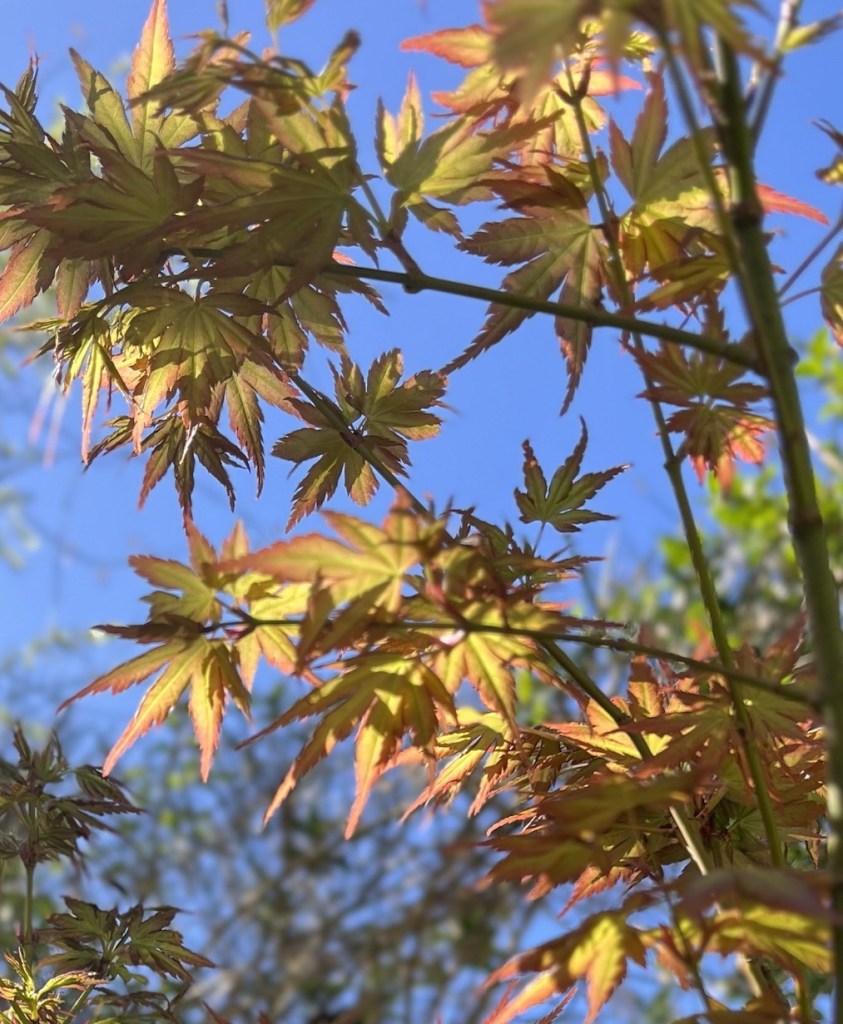
Scientifically, what we witness is the tree preparing for winter rest. As the days shorten and temperatures cool, chlorophyll production in the leaves slows. This green pigment, which drives photosynthesis, begins to break down, revealing hidden carotenoids (yellows and oranges) and anthocyanins (reds and purples). The intensity of colour depends on weather: warm days combined with cool nights bring out the richest, most vivid shades.
Japanese Acers (Acer palmatum) are especially prized for their autumn display. Their finely cut leaves, often delicate in shape, catch the September sun like stained glass. Larger maples, such as Acer campestre (the UK’s native field maple), also begin their seasonal shift, their foliage glowing golden as they prepare to shed. It’s a radiant sight that offers a living art gallery able to brighten even the most monotonous stretches of motorway and turn a routine drive into an autumnal ‘I-Spy’.
Beyond the science, there’s something deeply symbolic about an Acer in September. The change reminds us of the beauty of transition—that letting go can be spectacular!
For gardeners, it’s a good time to admire rather than interfere. Acers don’t like root disturbance, so September is best spent enjoying their show, perhaps underplanting with bulbs that will emerge when the Acer’s branches are bare. I have an Acer I plan to repot but not until it is well dormant in winter and all leaves are gone and branches bare.
As Autumn progresses, fallen leaves will scatter across the garden, enriching the soil as they break down, so there’s no need to hurriedly scoop up every fallen leaf. And the ones we do, let’s make valuable leaf mould or turn in with the compost for next year.
 Garden Regeneration
You must be logged in to post a comment.